
Intelligent Energy Management.
FMobile Lightning is planned around intelligent public fast charging: site load management, onsite solar forecasting, charger monitoring, flexible power sharing and reliable driver access. Fleet integrations remain an optional additional service.
Built for Today.Ready for Tomorrow.
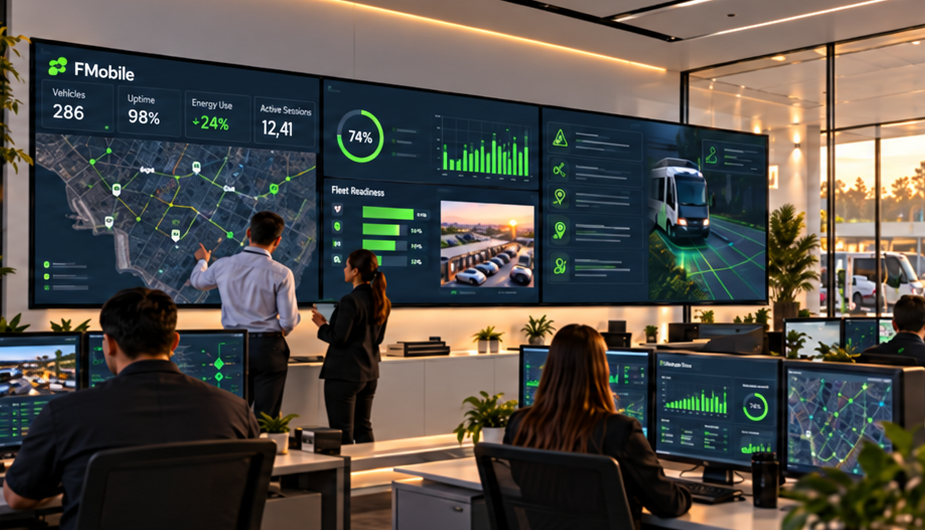
Leading fleet-infrastructure operators increasingly expose charger availability, charging sessions, incident tickets and site status through dashboards and APIs. FMobile is being designed around the same principle, then extending that visibility to cleaning, inspection, staging and vehicle readiness.
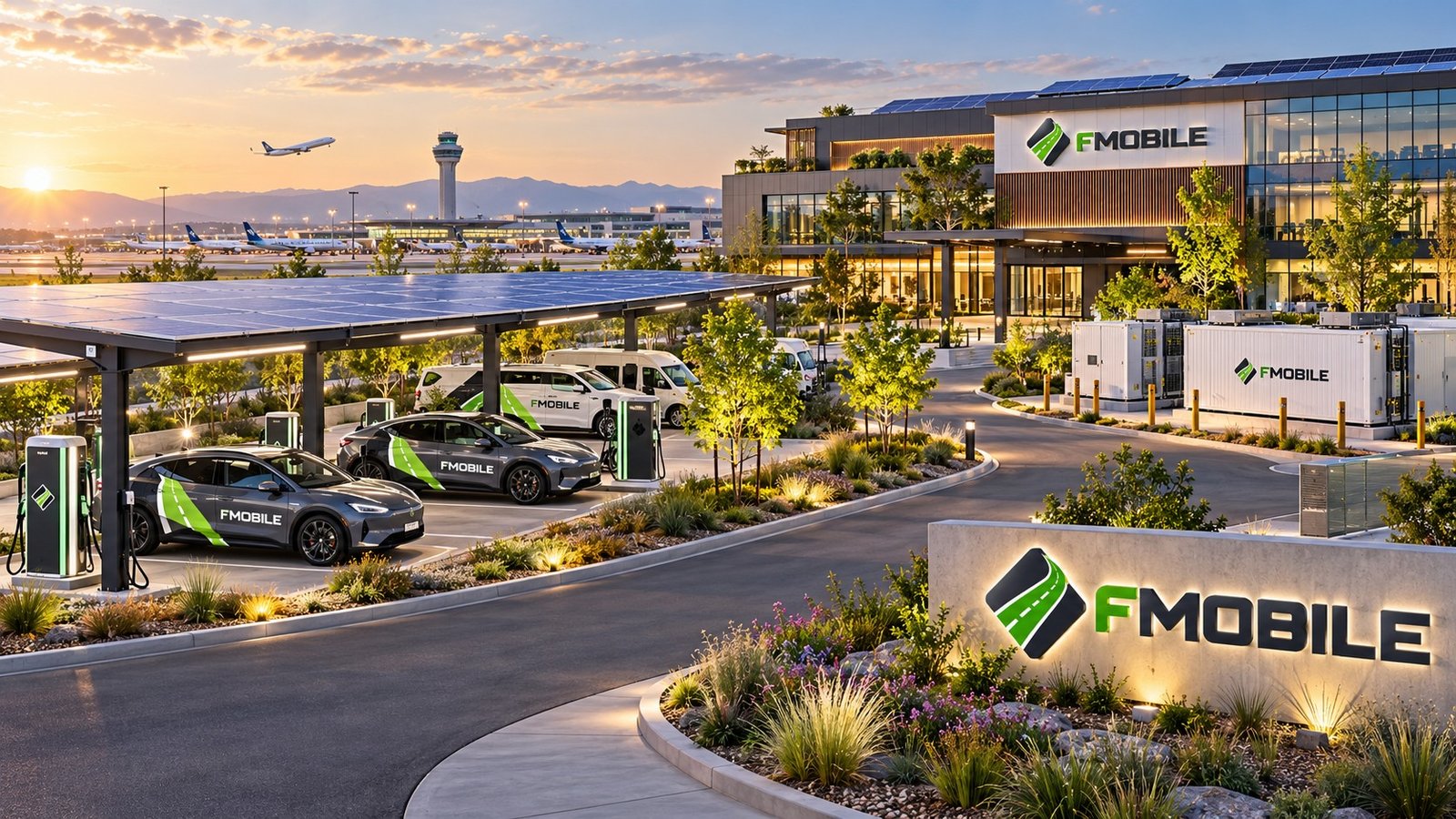
FMobile Lightning charging technology: Evaluating 350 kW-capable dispensers, CCS1 and NACS/J3400 support, prefabricated power skids, power-sharing controls and integration with solar and optional storage. Final supplier selection and installed capacity remain subject to site engineering.
One Intelligent Energy System.
Charging Orchestration
Assign charging windows based on departure time, state of charge, queue conditions and power availability.
Charging Reliability
Track charger availability, connector status, charging sessions, faults and preventive maintenance to improve driver experience.
Energy Management
Coordinate charging demand with utility limits, tariffs, storage and future distributed energy resources.
Operations Dashboard
Give site teams and customers a single operational view of charging sessions, tickets, utilization and turnaround.
Autonomous Hosting
Prepare for unattended arrival, charging, service and redeployment as vehicle platforms and regulation allow.
Open Integration
Maintain flexibility across charger manufacturers, charging software, energy systems, payment providers and future mobility requirements.
A staged technology approach.
Instrument charging and energy
Capture charger uptime, utilization, demand, delivered kWh, solar output and grid energy costs.
Optimize power and uptime
Use load forecasting, dynamic power sharing, energy controls and maintenance alerts to improve public charging reliability.
Integrate autonomous fleets
Support fleet-data integrations as an optional future service while prioritizing reliable public charging operations.
Automate repetitive tasks
Add robotics to selected cleaning, inspection, charging-support and logistics workflows when economics justify it.