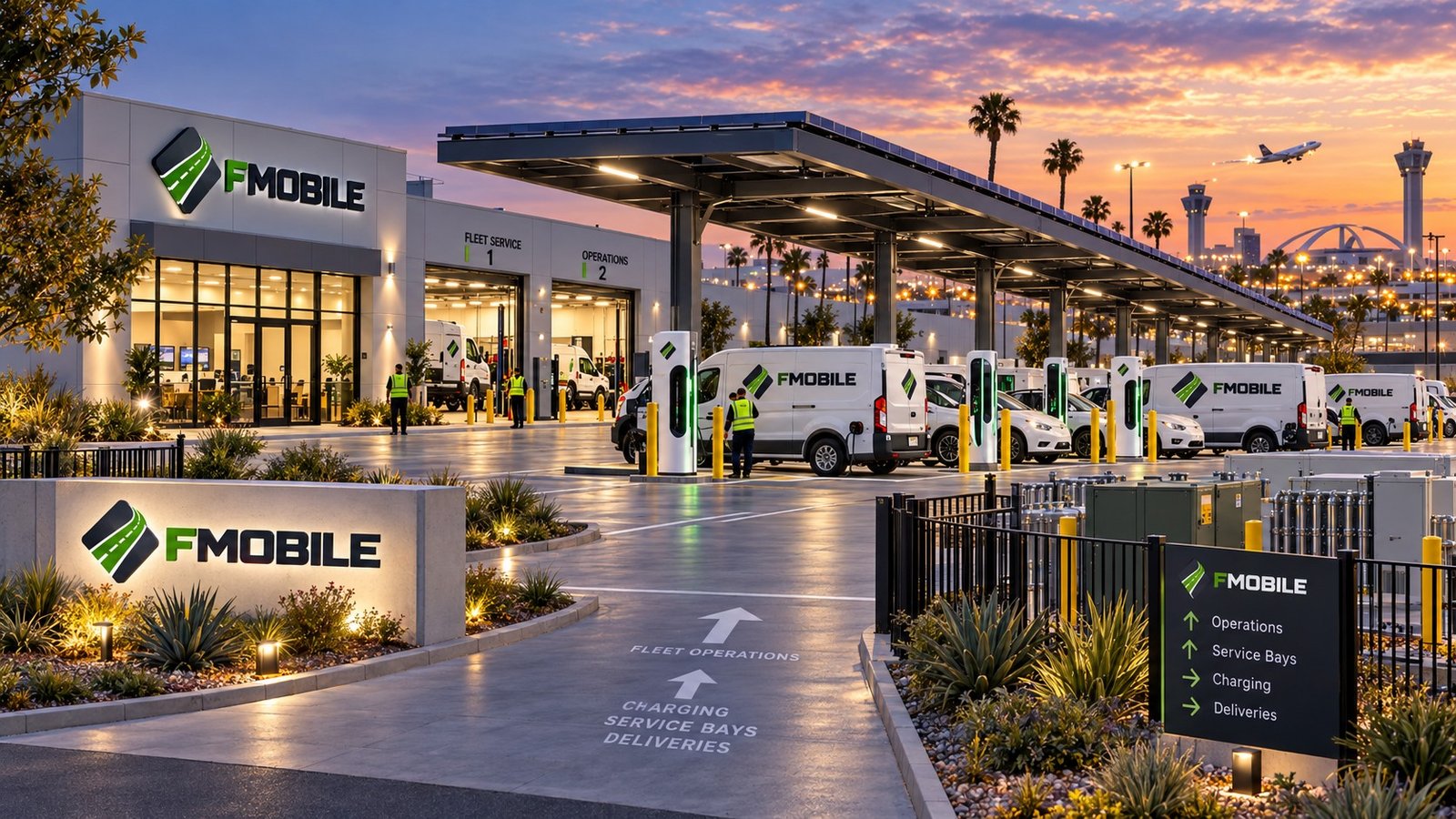
FMobile Lightning for Fleets.
The FMobile Lightning flagship is designed first for public fast charging. Select commercial services—such as scheduled fleet charging, driver support and vehicle readiness—may be added where they fit site operations and verified customer demand.
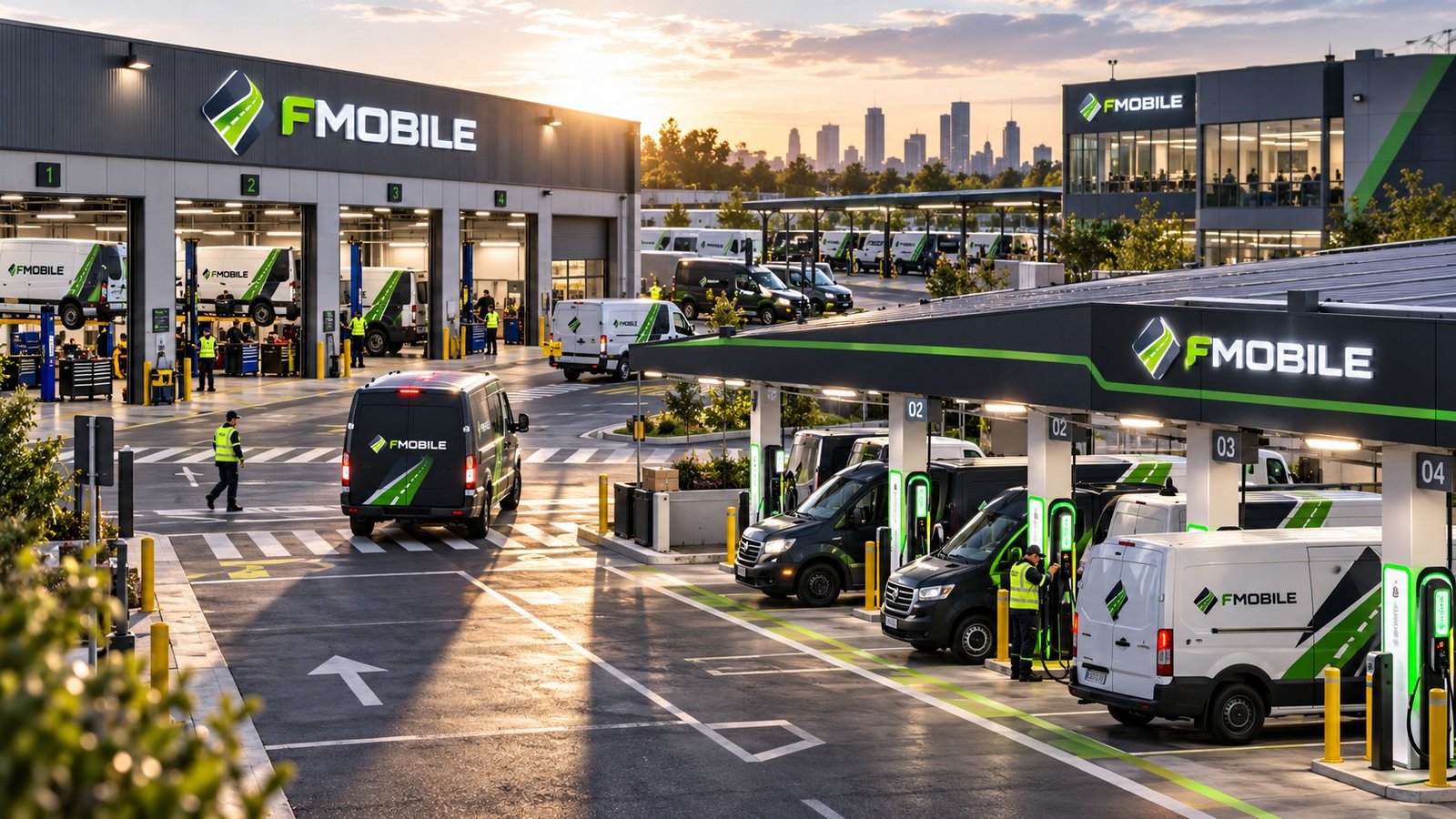
Built for Charging and Fleet Uptime.
Zeem demonstrates the value of full-service depot operations. RACER demonstrates the value of ultrafast public/fleet charging and driver amenities. TeraWatt demonstrates the importance of contracted capacity, strategic power and secure fleet infrastructure. FMobile is being designed to combine those proven elements with a broader vehicle-readiness layer.
Site selection begins with utility feasibility, not charger count.
Circulation, queuing and dwell times prioritize public charging customers; scheduled fleet use can be accommodated where feasible.
Security, monitoring, accessibility and driver amenities are planned for public use, with additional fleet support where warranted.
Charging uptime, station availability, energy use and service data support better site operations.
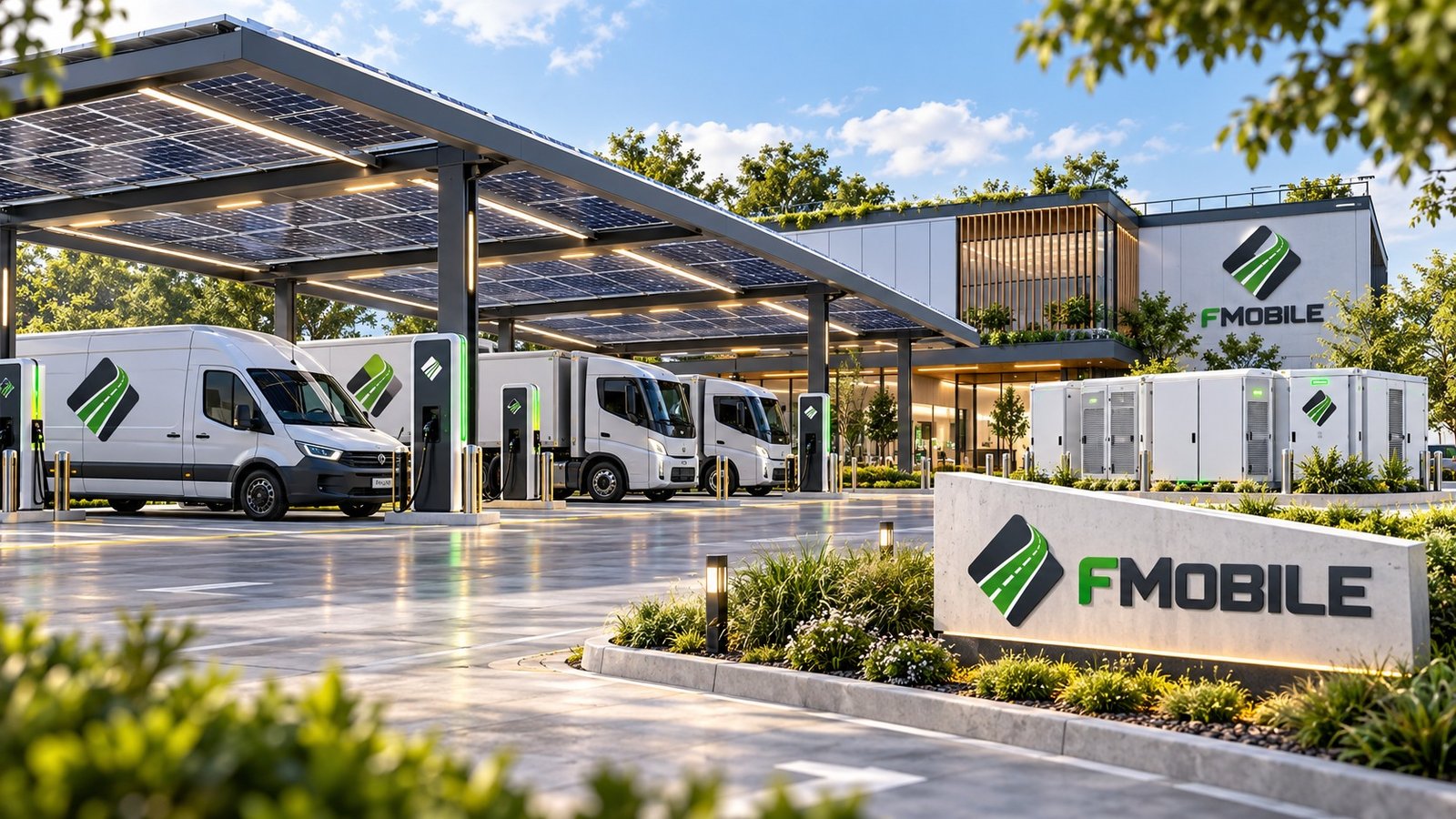
One stop between revenue shifts.
The goal is to reduce the time a commercial vehicle spends out of service. A vehicle can arrive, charge, be cleaned and inspected, receive minor readiness support, stage securely and return to service through a coordinated workflow.
Designed for Drivers. Adaptable for Fleets.
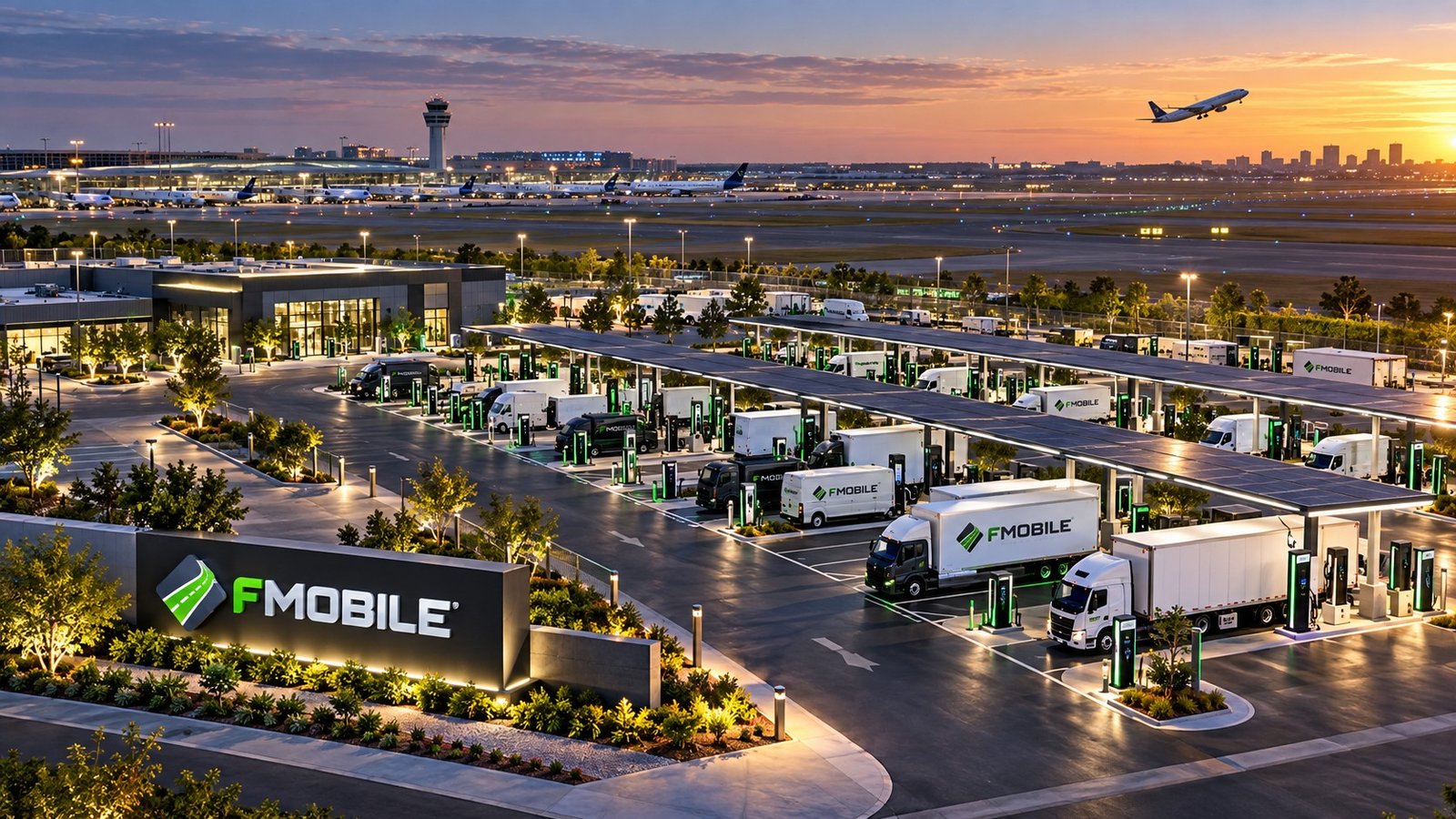
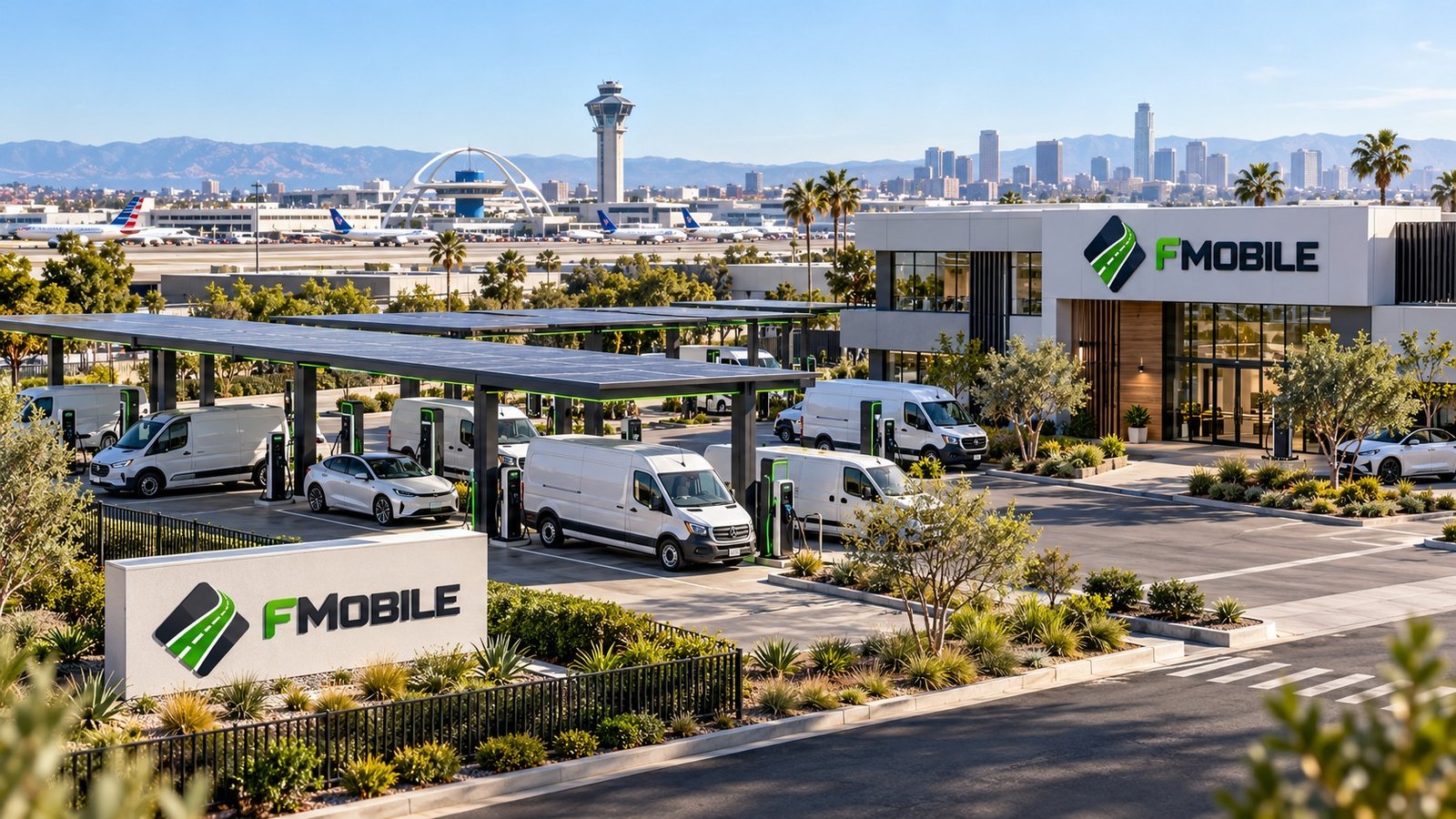
These concept renderings illustrate how customer access, charging canopies and supporting facilities could work together. FMobile Lightning is focused on public fast charging first; fleet services are an optional future addition where demand and site capacity justify them.

Infrastructure Built to Perform.
Public charging is the primary customer and revenue model. Fleet charging agreements may improve utilization and revenue stability, but they are not assumed to be prerequisites for launching the flagship. Project financing will be based on independently tested public demand and operating assumptions.
Assess duty cycle
Map vehicle mix, routes, dwell time, energy needs and service requirements.
Reserve capacity
Consider fleet charging agreements as supplementary revenue where demand and site operations support them.
Right-size infrastructure
Size utility service, shared charging power and any fleet support for forecast public demand and separately verified commercial needs.
Operate to uptime
Measure charger availability, vehicle readiness, turnaround time and customer service levels.
Palm Springs First.Expand Strategically.
The first-site search prioritizes industrial locations with sufficient acreage, circulation and realistic utility pathways. Once the operating model is proven, the same site-selection discipline can be repeated near other major airports, ports and mobility corridors.